 Skip to content

The shower vs bathtub decision turns on one question more than any other: is the tub you’d remove the only one in the house? That answer shapes the cost, the resale picture and how the bathroom works for the people who use it every day.
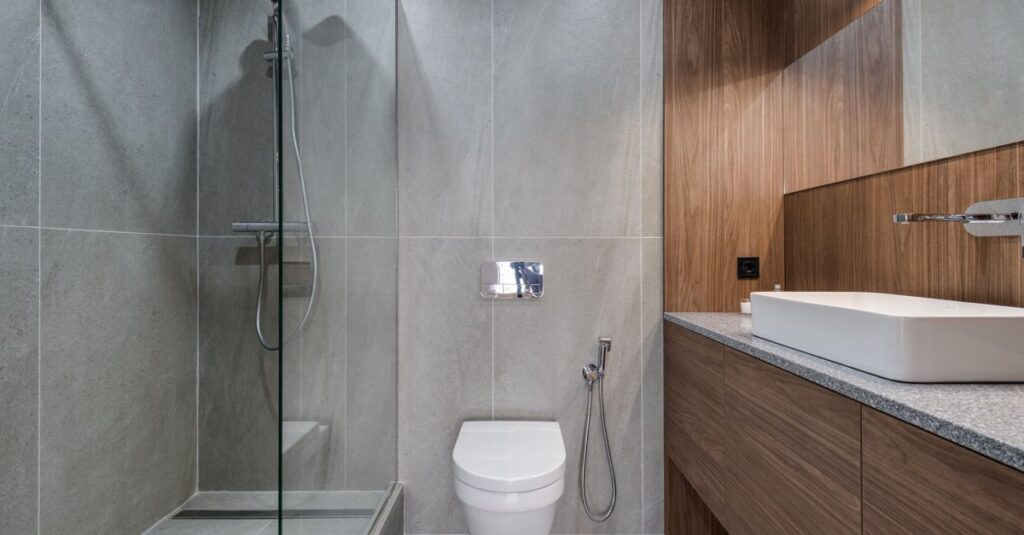
Cover photo by Max Vakhtbovych on Pexels
Shower vs bathtub: the short answer
If another bathroom in the house keeps a tub, a walk-in shower is usually the better use of this one. If this is your only bathroom, or your only tub, keep a tub, even when the shower becomes the showpiece.
Two things move that answer: who lives in the house now, and who might buy it later. The sections below take cost, resale, daily use and upkeep in turn.
Walk-in shower cost in a bathroom remodel
This Old House puts a walk-in shower at about $12,000 on average, with most projects between $4,000 and $20,000. The spread comes from how much gets built on site.
| Build | Typical cost | What it buys |
|---|---|---|
| Basic prefabricated | $4,000 to $7,000 | A prefab pan and modular wall surround in an existing alcove, with minimal plumbing changes |
| Midrange tiled | $8,000 to $13,000 | Tile walls and a tiled pan, a waterproofing membrane, a frameless or semi-frameless glass door, plumbing left where it is |
| High-end custom | $14,000 to $20,000+ | Custom mortar beds, a bigger footprint, moved plumbing, heavy frameless glass, benches and niches |
Layout matters as much as finishes. An alcove shower is typically the cheapest, while a curbless one needs changes to the subfloor so water slopes to the drain, and that adds labor.
A tub swap, a freestanding tub and a tiled walk-in are three very different jobs, so ask for the tub and shower options priced on the same tile, fixtures and plumbing. Any shower vs bathtub budget is only fair when both sides are quoted that way.
Which shower layout fits your bathroom
Alcove, corner, curbless and wet-room designs all count as walk-in showers, and they don’t cost the same. The same breakdown says an alcove is typically the least costly, a corner shower needs custom glass and more precise framing, and a curbless or roll-in shower needs subfloor work for drainage slope.
A freestanding or wet-room design sits at the top, since it needs full floor waterproofing and advanced drainage.
Parts add up fast. Ceramic or porcelain tile runs $12 to $30 per square foot installed, and a frameless glass enclosure can cost $1,000 to $3,000 or more.
Budget for the paperwork and the teardown as well. Permits can add several hundred dollars, and demolition, hauling and disposal of the old tub are part of the job.
Will taking out the tub hurt resale?
A tub to shower conversion usually doesn’t, provided the house still has a tub somewhere. Removing the only one is where the risk sits, because some buyers won’t consider a home without one.
Bob Vila quotes Realtor Rachel Moussa on exactly that: there are people who won’t buy a house without a bathtub. She also says the old one-tub-per-floor rule is no longer hard and fast.
Tastes have shifted. HomeLight, citing Houzz’s 2019 data, reports that half of renovated main bathrooms had no tub. Its writer is careful to add that a tub-less main bath isn’t the same as a house with no tub at all.
Price range changes the picture. In higher-end or newer homes, appraiser Woody Fincham says, the expectation is that at least one bathroom has a tub.
Agent Robb Harrison sees it differently in Florida. He doesn’t think skipping a tub does much to harm marketability, and says a home with fewer tubs can hold appeal for the right buyer.
When you’re selling soon and the tub would be your last, think about whether you’d credit a buyer the cost of adding one back.
And if the real worry is a missing second tub, adding a bathroom to a basement can solve it, with its own costs for plumbing and permits.
Who does better with a shower, and who needs the tub

Photo by Curtis Adams on Pexels
In the shower vs bathtub choice, the people in your house count for more than any trend. A walk-in shower suits seniors and anyone with limited mobility, since it’s easier to get into and out of than a tub.
Showers also deliver a constant supply of water at the temperature you set, where a tub’s water gradually cools. For a tub that’s easier to enter, accessible walk-in tubs with a side door exist, though they’re a different product from a standard tub.
Tubs earn their space in households with young children, where bath time is simply easier, and with pets, because a tub is often the easiest place to scrub a dog. A tub also holds hot water for a long soak, which a shower can’t do.
Bigger showers have narrowed the comfort gap. Moussa points to large frameless-glass showers with multiple shower heads, built-in seating and room to move without feeling cramped.
Water use and upkeep
Daily running costs belong in any shower vs bathtub comparison. Bob Vila’s figures are an average shower of about 8 minutes using roughly 16 gallons, against a bath that can run past half an hour and use around 70 gallons. Less water also means a smaller water bill.
Jetted tubs ask for more care. Moussa warns they can get pretty gross if neglected, because interior pipes that aren’t cleaned can grow bacteria.
A plain tub or a standard shower base needs far less attention than either of those.
How to settle the shower vs bathtub question for your house
Work through these in order, and the answer usually shows itself.
- Count the tubs you’d have left after the remodel. Zero is the case to think hardest about.
- Decide how long you’re staying. That same article suggests a shower alone may be enough if you’ll use the bathroom for years.
- Match the build to the room. An alcove shower keeps costs down, and a curbless one costs more but looks open.
- Get both options priced on identical specs.
If the plan means moving walls or pushing the bathroom outward, you’re into home renovations and additions, which brings its own scope. For a like-for-like bathroom refresh, our pages on bathroom remodeling in Wellesley and bathroom remodeling in Newton show the kind of work we do across Massachusetts.
One customer said of working with us: “It was refreshing to deal with a contractor that was on time and showed up when he said, ALWAYS kept me up to date on the work.” Whoever you choose, ask for that kind of communication up front.
Then ask each contractor to price the shower and the tub layouts on the same specifications, and compare the two quotes line by line.
Frequently asked questions
Is a curbless shower a safe long-term choice?
It can be, with one caution. Moussa notes that houses shift over time, so a curbless floor may let water pool years later, while even a small lip contains water better.
Are jetted tubs worth the upkeep?
Only if you’ll clean them properly. Pipes that aren’t filtered or cleaned can develop bacteria and microbial growth, which Moussa links to skin irritations and infections.
What pushes a walk-in shower toward the top of the price range?
Moving drains or supply lines, changing the footprint, and premium tile or glass all add cost. Older homes more often need plumbing, electrical or structural work too, according to This Old House.
Sources
- Walk-In Shower Cost — This Old House
- Does Every Home Need a Bathtub? The Pros and Cons of Going Tub-Free — Bob Vila
- Selling a House Without a Bathtub: Can You Get Away With Only Showers? — HomeLight