 Skip to content

Radiant floor heating cost depends mostly on one choice: electric cables or hot-water tubing. This Old House reports installed ranges of $8 to $15 per square foot for electric and $6 to $20 for hydronic, labor and materials included. That’s roughly two to four times what forced-air heat costs to put in.
So the real question is rarely the per-foot number. It’s whether the warmth underfoot is worth that premium in the room you’re remodeling, and for most homeowners the answer changes room by room.
What radiant floor heating cost looks like per square foot
Expect $6 to $20 per square foot installed for hydronic and $8 to $15 for electric, according to the This Old House figures above. Those numbers cover the heating system and its installation, not the new floor on top of it.
Hunker’s installer breakdown lands in the same place for electric, at $8 to $15 per square foot, and adds that embedded cables run $5 to $15 while cable mats run $10 to $12. For a sense of product pricing, Fine Homebuilding lists one peel-and-stick electric mat at $8.50 per square foot, plus labor and a thermostat.
| What you’re pricing | Typical cost | What it buys |
|---|---|---|
| Electric system, per sq ft | $8 to $15 | Cables or mat, thermostat and installation |
| Hydronic system, per sq ft | $6 to $20 | Tubing, pump, manifold and installation |
| Bathroom, whole job | $2,000 to $6,500 | Heating system for a typical bathroom floor |
| Kitchen, whole job | $2,500 to $7,500 | Heating system for a typical kitchen floor |
| High-efficiency boiler, installed | $6,000 to $9,000 | Heat source for a hydronic system |
The bathroom and kitchen totals come from Bob Vila’s cost guide, and the boiler price from the Hunker piece above. Treat them as budgeting ranges. Your floor size, access and flooring choice move them.
Electric or hydronic: which one fits your house?
The system you pick moves radiant floor heating cost more than any other decision, so it’s worth settling first.
Electric suits a single room, especially in a remodel. Hydronic suits a whole floor or a new build, where one boiler can feed many zones.
Electric radiant floor heating
Electric systems are quicker and easier to install, and they respond fast. Bob Vila describes them as great for installing in remodels and generally reserved for bathrooms, kitchens and smaller rooms.
The trade-off is the electric bill. This Old House puts the load at 6 to 10 watts per square foot, which it calls prohibitively expensive for heating a whole house. Fine Homebuilding makes the same point from the other side: to warm a room rather than just take the chill off the tile, the system has to stay on continuously.
Hydronic radiant floor heating
Hydronic systems pump warm water through tubing under the floor. Upfront costs are higher, with water-based systems running two or three times what electric does according to Bob Vila, but they’re cheaper to operate.
They also need a heat source. A standard gas boiler installs for roughly $2,500 to $3,000, while a high-efficiency one runs $6,000 to $9,000, per Hunker. If you’re already replacing a boiler, that number changes the math in hydronic’s favor.
Retrofitting is where hydronic gets harder. This Old House notes that new construction, where tubing is embedded in concrete, costs less than retrofitting an existing home, which means working from the subfloor or between joists.
What it costs to run radiant floor heating
Electric costs more to run than hydronic, and the gap grows with room size. For a small bathroom, the running side of radiant floor heating cost stays modest.
Fine Homebuilding quotes one manufacturer’s figure for a 60-square-foot area: about 9 cents to reach temperature, and half that for each hour after, at 12 cents per kilowatt-hour. That’s a manufacturer’s claim, so your own electric rate and insulation will change it. Check your bill’s per-kilowatt-hour rate and scale the figure before you budget.
Efficiency is a fairer fight than the bills suggest. Fine Homebuilding says radiant is more efficient than baseboard heating and can beat forced air in smaller areas with conventional ceiling heights. Hydronic uses the least energy of the options and pairs with solar panels and heat pumps.
Which floors work with radiant heat
Tile and stone work best. This Old House lists ceramic tile, stone and engineered wood as ideal for hydronic, and tiles, laminate and some vinyl for electric.
Carpet is the problem floor. Thick padding insulates the heat away from the room, and This Old House puts it bluntly: if the floor is too well insulated, radiant heating doesn’t make sense.
Solid hardwood needs care. Hunker warns that wood and laminate can be damaged by persistent high heat, and that a floor sensor should cap the temperature at the manufacturer’s limit, usually between 80 and 90 degrees Fahrenheit.
One more thing to budget for is height. Bob Vila says the system adds about an inch to the floor, which matters at doorways and where it meets existing flooring.
Is radiant floor heating worth the cost?
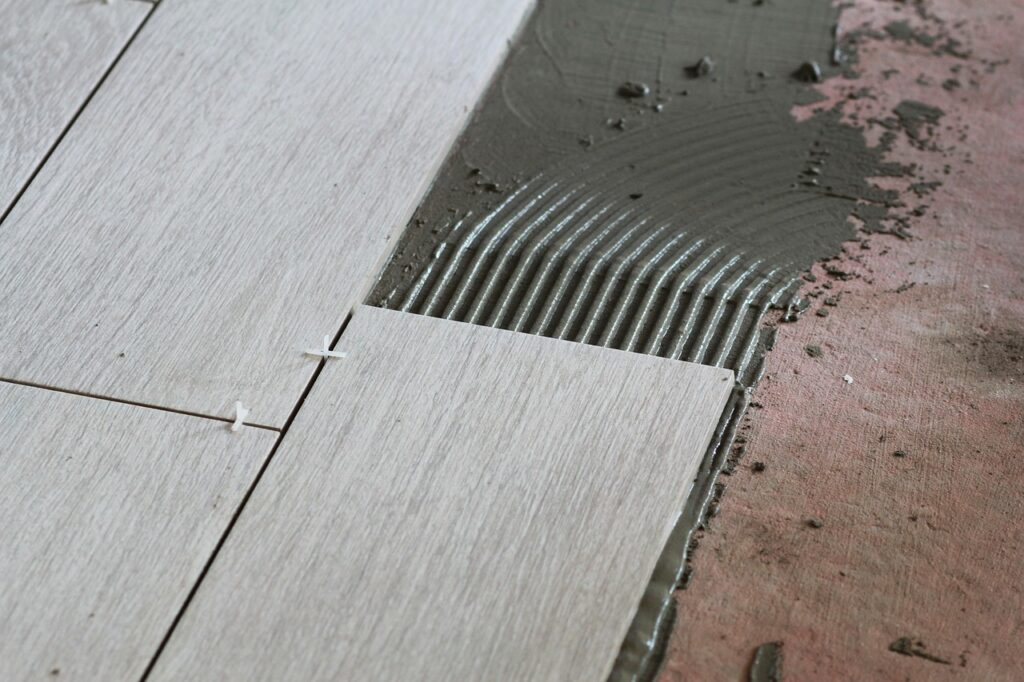
Photo by Irina_kukuts on Pixabay
In a bathroom, yes. In a kitchen, usually. Across a whole house retrofit, only if you were already opening the floors.
The bathroom case is the strongest because the floor is tile, the room is small and the electric running cost stays low. A programmable thermostat lets you start heating a few minutes before a shower, as Fine Homebuilding describes, so the floor isn’t on all day.
Whole-house hydronic is a different decision. At $6 to $20 per square foot, a large floor adds up fast, and the installed price is two to four times that of forced air. It makes the most sense in an addition or full remodel where the subfloor is open anyway.
Radiant floor heating cost is easiest to control when warm floors are added to a bathroom or kitchen project at the start, before the tile goes down. If you’re comparing it against the rest of the budget, our guide to choosing between a shower and a bathtub shows where the other bathroom dollars go, and our basement bathroom cost breakdown covers a room where a cold slab makes heated floors especially appealing.
Planning radiant floor heating into a remodel
Decide before demolition, because the radiant floor heating cost is lowest when the floor is already open, and because the system sits under the finished floor. Our bathroom remodeling and kitchen remodeling work is where most of these installs belong, and larger renovations and additions are where hydronic becomes realistic.
Ask every contractor to price the heating system, the thermostat and any electrical work separately from the flooring, so quotes compare cleanly. Hunker notes you may need an electrician to connect electric elements, and that whole-house installs of either type are not a DIY project.
Reliability counts as much as price on a job like this. One customer, Jodi Smith, wrote about her remodel: “It was refreshing to deal with a contractor that was on time and showed up when he said, ALWAYS kept me up to date on the work.”
If the project is big, financing is worth a look too. Our overview of renovation loan options covers ways to fund a project like this.
Frequently asked questions
What is a realistic radiant floor heating cost for one bathroom?
Bob Vila’s guide gives $2,000 to $6,500 for a bathroom. The spread comes from floor size, system type and how easy the floor is to reach.
Is electric or hydronic cheaper?
Electric is cheaper to install and costs more to run. Hydronic reverses that, and it needs a boiler or other heat source on top.
Can radiant heat go under hardwood or carpet?
Engineered wood works well, per This Old House. Solid hardwood can be damaged by sustained heat, and thick carpet padding blocks it, so tile is the safer match.
Does radiant heat make the floor much higher?
Bob Vila says it adds about an inch. Plan for that where the new floor meets doorways and neighboring rooms.
Can radiant floor heating be added to an existing house?
Yes. Electric mats are the easy retrofit, and hydronic tubing can be stapled under the subfloor or run in pre-grooved boards, according to Hunker, though it costs more than in new construction.
Sources
- Radiant Floor Heating: Why It’s Worth It — This Old House
- Radiant Floor Heating Cost — Bob Vila
- Warm Floors and Energy Efficiency — Fine Homebuilding
- How Much Does It Cost To Install Radiant Flooring? — Hunker