 Skip to content

Home improvement tax deductions are rarer than most homeowners hope: for your main home, the IRS generally treats a renovation as an addition to what you paid for the house, not as something you subtract from this year’s income. For smart home upgrades, that makes the wiring behind them the part worth planning, since it’s cheapest to run while the walls are open.
Here’s what the IRS actually says about wiring, security systems, electrical panels and energy credits, and which smart upgrades earn their place in a renovation plan.
Are home improvement tax deductions available for smart upgrades?
Usually not in the year you pay. IRS Publication 523 explains that improvements add to the value of your home, prolong its useful life or adapt it to new uses, and that you add their cost to your home’s basis instead of deducting it.
Basis is the number your gain is measured against when you sell. A higher adjusted basis means a smaller taxable gain, so the benefit arrives later, and only if a sale produces a gain large enough to matter.
The same publication notes that a married couple filing jointly can exclude up to $500,000 of gain on a main home, and a single filer $250,000, if they meet the eligibility test. For many homeowners the exclusion covers the whole gain, which means basis records matter most for people who’ve owned a long time or live in a fast-rising market. A tax professional can tell you which group you’re in.
Home improvement tax deductions versus the energy credit that ended
The one federal break that did reach some upgrades was a credit, not one of the usual home improvement tax deductions. According to the IRS page on the energy efficient home improvement credit, it equaled 30% of qualified expenses on a main home, and it applied to property placed in service on or after January 1, 2023 and before December 31, 2025.
That window has closed for anything installed from here on. If you’re starting a project now, plan on the credit being gone and treat any savings as a bonus from a utility program, not something to budget around.
For the record, these were the limits the IRS listed:
| Item | Credit limit |
|---|---|
| Most efficiency improvements, per year | $1,200 |
| Exterior doors | $250 per door, $500 total |
| Windows and skylights | $600 |
| Electrical panel of 200 amps or more | $600 |
| Home energy audit | $150 |
| Heat pumps, water heaters, biomass stoves | $2,000 per year |
Notice what’s missing. The IRS page doesn’t mention smart thermostats, smart locks, cameras or lighting, so nobody should have assumed those qualified.
Wiring and security systems count as capital improvements
Publication 523 lists wiring and a security system under the systems that count as improvements, alongside heating systems, central air conditioning, ductwork and water filtration. If you add them as part of a remodel, their cost goes into your home’s basis.
Among home improvement tax deductions people hope for, this is a modest benefit, but it’s real, and it’s one more reason to do the electrical work properly instead of patching it in later. A cable pulled through an open wall is a line on a contractor’s invoice you can keep for years.
Repairs are a different category. Fixing something that broke generally isn’t an improvement, so a project that replaces a failing circuit and adds capacity belongs on your improvements list, and the receipts should say which is which.
The smart thermostat is the easiest upgrade to justify
A smart thermostat is a Wi-Fi device that adjusts heating and cooling for you, learns your preferences and can be controlled from a phone, according to ENERGY STAR. The agency says certified models have been independently verified, based on field data, to deliver energy savings.
Heating and cooling are where the money goes: ENERGY STAR puts almost half of the average household’s annual energy bill there, more than $900 a year. A device that trims that without any change in how you live earns its cost faster than most gadgets.
If your plans include heated floors, check how the controls will tie together before the tile goes down. Our guide to radiant floor heating cost and comfort covers what that system involves.
Why the walls are the cheapest time to run wire
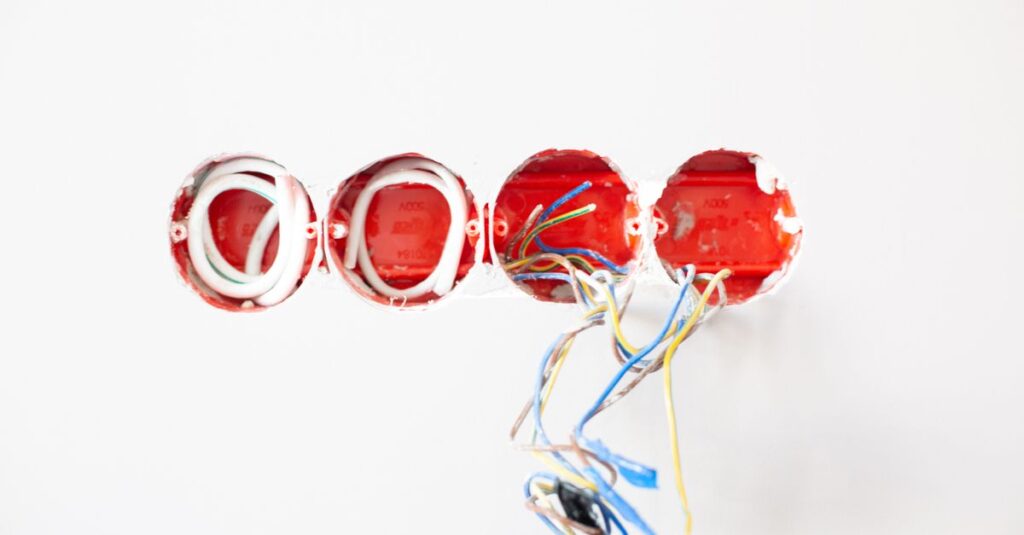
Once drywall and cabinets are in, every new cable means opening a wall, patching, sanding and repainting. During a gut renovation the same cable is a few minutes of work for a crew already standing there.
So decide what you want before the electrician arrives. A short list works better than a long one:
- Low-voltage wire to the spots where you might want cameras, a video doorbell or a keypad.
- A neutral wire at light switches, which many smart switches need.
- Empty conduit to the attic or basement, so a future cable doesn’t mean cutting walls.
- Extra outlets at the places you’ll want a charger, hub or sensor.
None of this depends on home improvement tax deductions, and you don’t have to buy any of the devices now. Wiring that sits unused costs little, and wiring you wish you had costs a lot.
Kitchens are where this planning pays off fastest, since so much electrical work lands in one room. Our kitchen remodel planning checklist puts the electrical decisions in the order a contractor needs them, and a home renovation or addition gives you even more open framing to work with.
The same applies to an upgrade of your electrical panel. The IRS page described panelboards and feeders of 200 amps or more as eligible for the old credit, up to $600 per item, which tells you how central the panel is to any serious electrical plan. If you want to add heavy loads later, ask about capacity while the work is already underway.
One customer, Jodi Smith (DSC), described what she valued in a contractor: “It was refreshing to deal with a contractor that was on time and showed up when he said, ALWAYS kept me up to date on the work.” With several trades sharing one set of walls, that kind of communication is what keeps wiring from being missed.
Keeping records so basis counts when you sell
Publication 523 says that any time you buy real estate you should keep records documenting the property’s adjusted basis, and that they should generally be kept until three years after the due date of the return for the year you sell the home.
To claim any benefit from home improvement tax deductions or basis later, you need paper. For a renovation, that means the signed contract, itemized invoices and proof of payment. Ask for the electrical and low-voltage work to be listed as its own lines, because it’s much easier to point to a line that reads “wiring” than to dig through a lump-sum total. Our guide to tax credits and records that depend on your project’s finish date explains why a written completion date matters.
Photos taken before the drywall goes up also help. They show what was installed and where, which is useful to the next electrician and to you.
If financing the project is part of the plan, our overview of renovation loan options such as FHA 203k and HomeStyle explains how those loans work.
Frequently asked questions
Are smart home devices covered by home improvement tax deductions?
No federal deduction applies to them for a main home. Their cost generally isn’t deducted in the year you pay, though wiring and a security system are listed in Publication 523 as improvements that add to your basis.
Does the energy efficient home improvement credit still apply?
The IRS page lists property placed in service before December 31, 2025. Anything installed after that date falls outside the credit as the IRS describes it.
Do smart thermostats qualify for a federal credit?
The IRS page on the energy efficient home improvement credit doesn’t mention them. ENERGY STAR certifies them for energy savings, but certification isn’t a tax credit.
What records should I keep after a renovation?
Keep the contract, itemized invoices and proof of payment. The IRS says to hold basis records until three years after the due date of the return for the year you sell.
Sources
- Energy efficient home improvement credit — IRS
- Publication 523, Selling Your Home — IRS
- Smart thermostats — ENERGY STAR
Cover photo by Kathleen Austin Kuhn on Pexels
Cover photo by Kathleen Austin Kuhn on Pexels