 Skip to content
Mudroom Addition Ideas New England: 2026 Design & Cost Guide

Mudroom addition ideas New England homeowners consider in 2026 often focus on durable flooring, built-in storage, winter gear organization, and layouts designed for wet and snowy conditions. A New England mudroom addition typically costs $6,500 to $18,000 for a conversion of existing space, or $15,000 to $40,000 for a new bump-out addition, with costs varying based on size, foundation requirements, materials, labor, and local building requirements.
This guide covers realistic New England mudroom costs by project type and size, the specific features regional builders report as most requested, and the design trends genuinely shaping mudrooms across Massachusetts, Connecticut, New Hampshire, Vermont, Maine and Rhode Island.
How Much Does a Mudroom Addition Cost in New England?
| Project Type | Typical Cost Range | Notes |
| Conversion (garage, porch, hallway) | $3,000–$12,000 | Most affordable option, $50–$100 per sq ft |
| New bump-out addition | $100–$300+ per sq ft | Includes foundation, roof tie-in, insulation |
| Massachusetts full addition | $15,000–$40,000 | Higher for custom work |
| New-construction mudroom | $5,000–$25,000 | Built alongside a larger addition project |
How Does Cost Scale by Mudroom Size?
| Size | Square Footage | Typical Cost | Notes |
| Small | 36–50 sq ft | $3,600–$15,000 | Basic storage only |
| Medium | 50–100 sq ft | $6,500–$25,000 | Most common size built |
| Large/premium | 100–150+ sq ft | $15,000–$40,000+ | Often includes laundry or pet wash |
New England home additions overall commonly run $160 to $400 per square foot finished, higher in coastal or high-demand areas including Boston suburbs, Portsmouth NH, and ski towns. Mudrooms sit toward the higher end of room-specific pricing given their dense cabinetry and durable finish requirements.
What Features Do New England Homeowners Request Most?
Local builders across Massachusetts and Connecticut consistently report these as top requests, driven directly by the region’s harsh winter conditions:
- Individual lockers or cubbies, one per family member
- A long built-in bench with storage underneath
- Hooks positioned at two heights, adult level and kid level
- Water- and salt-resistant flooring, either porcelain tile or luxury vinyl plank in darker tones
- A utility sink or dedicated dog-wash station
- Mixed closed storage and open cubbies to hide daily clutter
- Vertical, full-height cabinets for seasonal gear like skis, sleds and heavy coats
- Strong lighting and outlets for boot dryers and device charging
- Easy-clean, scrub-resistant finishes with dark grout
Why Does Flooring Choice Matter So Much in New England?
Flooring genuinely represents the single most important material decision in a New England mudroom, since salt, melting snow and constant wet foot traffic destroy materials that perform fine elsewhere in the home.
| Flooring Type | Salt/Water Resistance | Recommended for Mudrooms? |
| Porcelain or ceramic tile | Excellent | Yes, top choice |
| Luxury vinyl plank (LVP) | Excellent | Yes, top choice |
| Hardwood | Poor, stains and warps | No |
| Carpet | Very poor, traps moisture and salt | No |
Porcelain tile and LVP in darker tones genuinely hide winter salt residue and slush stains far better than lighter materials, making color selection nearly as important as the material category itself.
If you are planning a mudroom addition and want a realistic design and cost estimate for your specific home, our home renovations and additions team is happy to walk through …
Skylight Installation in Massachusetts: What Homeowners Need to Know
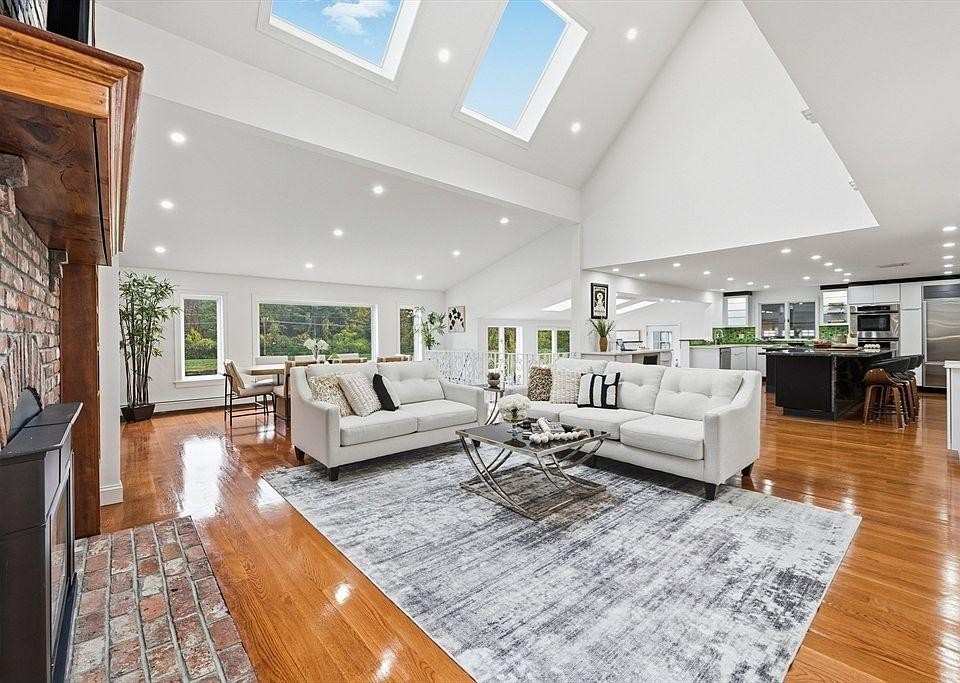
It’s the kind of gloom that descends into a Massachusetts house in the middle of January. It’s 3 pm, the sun has dipped behind the neighbour’s tall oak trees, and your kitchen is a cave. With the best windows in the brightest Colonial or Cape Cod-style residences, it is difficult to outsmart the gray New England winter. Imagine spending six months of the year living in a gorgeous house that feels cold, dark, and unwelcoming. Hence, the incorporation of skylight in MA is one of the most impactful upgrades per square foot; it isn’t just about altering the look of the room, it’s about transforming the feeling within it.
Skylight installation in MA is the business of cutting a hole in the roof, strengthening the rafters and fitting a high-quality window, like a VELUX solar energy window or a regular window, in the opening to admit natural light and air into a house. Skylight installation experts in Massachusetts, XP Construction offers a range of solutions to homeowners throughout Greater Boston and MetroWest, all designed to be weather-tight and withstand the distinct New England climate.
Why Massachusetts Homeowners Are Installing Skylights Right Now
Skylights are a solution that traditional windows can’t compete with, especially in an area of the country where historic buildings and neighborhoods are abundant. In Newton or Wellesley, many houses line up on the street, and if you need a new window in one, you may end up with a fantastic view of your neighbor’s siding.
The difference is that a skylight looks straight up, without taking up any of your wall space or compromising your privacy!
Outside of the looks, however, the energy efficiency of more recent units is huge. In natural light, a single 2×4 skylight can generate the same light as eleven 100-watt bulbs, significantly cutting down on the amount of daylight that you need to rely on. During the coldest months of winter in Massachusetts, passive solar heat gain from south-facing skylights can help reduce your heating costs.
On the other hand, a vented skylight can serve as a chimney in a humid July in Framingham, where hot air can rise through it and out of the roof, alleviating the burden on your air conditioning system. It’s a wellness and mood-boosting enhancement that influences your circadian rhythm – a quality every New Englander could use during the limited daylight hours of fall.
Types of Skylights XP Construction Installs in MA
Choosing the right unit is about more than just picking a size. At XP Construction, we exclusively work with VELUX products because they are engineered specifically for volatile climates like ours. Whether you are looking for a simple light source or a high-tech ventilation system, there is a model designed for your roof.
Fixed Skylights
Fixed skylights are the “set it and forget it” option. These units are sealed tight and do not open, making them the most budget-friendly choice for hallways, stairwells, and vaulted ceilings where you only need light. Because they …
Kitchen Remodel Cost in Massachusetts: Real 2026 Numbers from a Local Contractor

If you are a homeowner in Newton, Wellesley, or Framingham, you have probably experienced the frustrating situation of a data gap. You go to a national site, and type in Kitchen Remodel Cost Massachusetts , and they tell you it costs an average of $35,000. Then, you talk to a neighbor who just completed a project, and they say a number around $90,000
It doesn’t mean it’s a scam; it’s a regional reality. National averages are based on states where the cost of licensed master trades is half that of the Bay State and where “new construction” is the norm. Here in Massachusetts, we have to work with 80-year-old plaster, 10th edition building codes, and a very competitive job market. What it really takes to swing a hammer in Massachusetts in 2026 isn’t the national average; it’s the real cost.
Most kitchen remodels, not merely a refresh, but a full remodel with new cabinets, stone countertops, and updated systems for kitchen, bath, and other areas, in Massachusetts, in the Greater Boston and Metrowest areas, cost between $55,000 and $100,000. Cosmetic work is typically priced at around $25,000, while more extensive structural changes in the layout of a gut can cost well over $120,000.
Kitchen Remodel Cost in Massachusetts – By Scope (2026)
The single biggest factor in your final invoice is the “scope of work.” Are you working within the existing footprint, or are you tearing down walls to create that open-concept floor plan everyone wants in 2026?
2026 Massachusetts Kitchen Remodel Pricing Tiers
| Remodel Type | What’s Included | Typical Cost Range (MA, 2026) |
| Cosmetic Refresh | Cabinet painting, new hardware, basic countertop swap, fresh paint. No layout changes. | $25,000 – $40,000 |
| Minor Remodel | New stock cabinets, quartz countertops, mid-range appliances, updated lighting. No layout changes. | $40,000 – $65,000 |
| Mid-Range Renovation | Semi-custom cabinets, premium stone, new flooring, backsplash, updated plumbing/electrical in the same spots. | $65,000 – $100,000 |
| Full Gut Renovation | Custom cabinetry, high-end appliances, layout changes, plumbing/gas relocation, structural work. | $100,000 – $160,000+ |
Cosmetic Refresh: This is the most cost-effective way to update a kitchen that is functionally sound but visually dated. By keeping the cabinet boxes and layout intact, you avoid the high costs of plumbing permits and structural modifications.
Minor Remodel: This is the “sweet spot” for many homeowners in towns like Natick or Waltham. You get the feel of a brand-new kitchen with modern stock cabinetry and quartz surfaces, but you stay within the existing footprint to keep labor costs predictable.
Mid-Range Renovation: This is where the majority of our Greater Boston and Metrowest clients land. It allows for higher-quality semi-custom cabinets and professional-grade appliances. While the plumbing and gas lines stay in their general vicinity, the entire aesthetic and functional flow of the room is transformed.
Full Gut Renovation: Required for older homes where the systems behind the walls are no longer up to code or for homeowners who want to “flip” the kitchen and dining room locations. This involves relocating the “wet wall” (plumbing) and gas …
Chimney Repair MA: Complete Homeowner’s Guide to Chimney Repair in Massachusetts
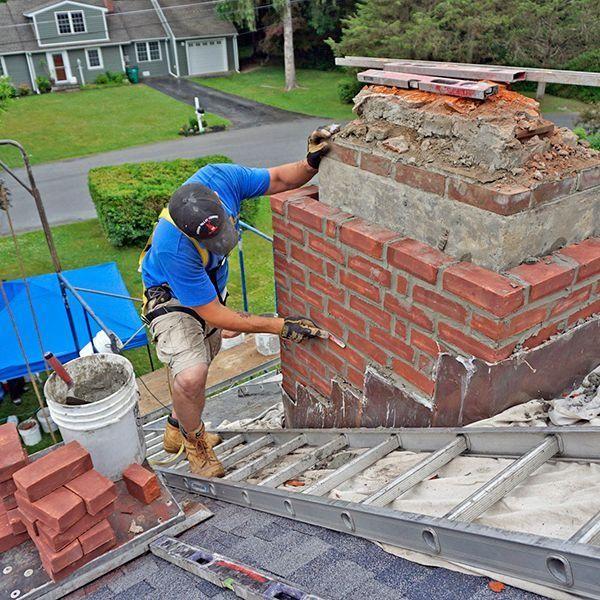
Chimney Repair MA refers to the professional restoration of a chimney’s structural and functional components, including masonry, flashing, crowns, and caps, to ensure the system remains watertight and fire-safe Of a chimney’s structural and functional components – including masonry, flashing, crowns, and caps – to ensure the system remains watertight and fire – safe. XP Construction provides expert chimney repair in Massachusetts, delivering high-quality masonry and roofing integration to protect local homes from the devastating effects of the New England climate.
If you own a home in Massachusetts, you’ve likely experienced that moment of quiet dread when you look up at your roofline and notice a few red flakes of brick scattered on the shingles, or worse, a dark water stain spreading across the ceiling near your fireplace. It is deeply frustrating to realize that the most iconic feature of your Colonial or Victorian home – the chimney – is literally crumbling before your eyes. You’re left wondering if the whole thing is going to collapse during the next Nor’easter, and the search for “chimney repair near me” often leads to more questions than answers. You don’t just need a “patch job”; you need a solution that can survive a Massachusetts winter.
Why Massachusetts Chimneys Need More Maintenance
Massachusetts is among the “high stress” regions in masonry. A chimney in a milder climate may stand for sixty years without a touch-up; in Boston, Worcester or Newton, he is engaged in a never-ending struggle with the elements.
The Freeze-Thaw Cycle: The Silent Masonry Killer
In Massachusetts MA, the main cause of chimney collapse is the constant freeze-thaw. Brick and mortar are porous, breathe, and absorb moisture. The chimney absorbs rainwater when it rains in January. That water freezes on this cold night and expands by 10% as it changes into solid ice. This is due to the internal pressure, which causes the brick faces to pop off (known as “spalling”) and the mortar to become a sandy powder.
Exposure to coastal moisture and salt
Salt air is another source of deterioration for our clients in Quincy, the North Shore and the South Shore. Sub-florescence can occur inside the brick pores and result in the weakening of the masonry from within. With heavy snows in New England and strong winds, it’s not hard to understand why “standard” masonry isn’t sufficient; you need specialized Massachusetts chimney repair expertise!
Signs Your Chimney Needs Repair
Knowing the warning signs can save you tens of thousands of dollars in rebuilding costs. If you catch these issues early, a simple repair will suffice. If you wait, you’re looking at a full reconstruction.
- Spalling (Flaking) Bricks: If you find chips of brick on your roof or in your yard, the structural integrity of the brick itself is failing.
- Efflorescence (White Staining): This white, powdery substance is salt being pushed out of the brick by moisture. It’s a clear sign that your chimney is holding too much water.
- Cracked or Melted Crown: The “cap” of mortar
Retail Roofing Contractor MA: The Business Owner’s Guide to Protecting Your Storefront

A retail roofing contractor in MA is a specialized commercial professional responsible for the design, installation, and upkeep of roofing systems on shopping centers, standalone stores, and mixed-use developments. XP Construction provides expert retail roofing services in Massachusetts, ensuring that local businesses stay dry, energy-efficient, and open for customers regardless of the volatile New England weather.
If you own a retail space in Massachusetts, you know that your roof is essentially your first line of customer service. There is no faster way to kill a Saturday morning sales rush than having a yellow “Caution: Wet Floor” sign and a plastic bucket sitting in the middle of your showroom floor. It’s embarrassing. It’s frustrating. And for the business owner, it’s a liability nightmare. You’re trying to focus on inventory, staffing, and margins, but instead, you’re staring at the ceiling, praying that the “mystery drip” near the cash wrap doesn’t turn into a deluge during the next Nor’easter.
What Makes Retail Roofing Massachusetts Unique
While most people consider a roof to be just a roof, there are certain headaches that a retail roofing contractor in MA has to face, which are not found with other roofing contractors. It’s not silent like a warehouse, but it’s a retail roof and that’s where your large HVAC systems may be, as your customers want an ideal 70° temperature all year round. All those units can be a source of leaks. In addition, there is constant foot traffic by HVAC technicians, sign installers and satellite dish workers. The additional visitors are walking holes in your investment if your contractor did not invest in proper protection of your investment.
The 2026 Retail Reality
The Massachusetts retail landscape is changing into “Mixed-Use” and “Lifestyle Centers” in the year ahead. It is not a roof, it is a platform for solar panels, green space, and a complex drainage system. Nearly 40% of new retail roof installations today in the Northeast are either “cool roofs” or utilize other technologies to comply with the Region’s rigorous energy codes for new roof installations. Your contractor should be discussing what R-value and solar reflectivity mean with you; if not, it’s over, and your electric bill will be paid out of your pocket.
Choosing a Retail Roofing Contractor in MA: What to Look For
Do not simply hire the man who did your neighbour’s garage. Retail roofing is a commercial trade at a high cost factor. Your 2026 “Expert Checklist”:
Non-Disruptive Scheduling: Are they able to work at night? Are they able to do a tear-off without blocking your front door during rush hour? They should not be a retail contractor if they are unable to work around your customers.
In a retail setting, the liability is 10 times greater. In a retail setting, the liability is 10 times greater and is called Safety Certification. A contractor with a clean OSHA record and high limits umbrella insurance is required.
The manufacturer certification is an important one to consider; find a “Master Elite” or …
EPDM Roofing MA: The Battle-Tested Guide to Rubber Roofing for Massachusetts Business Owners
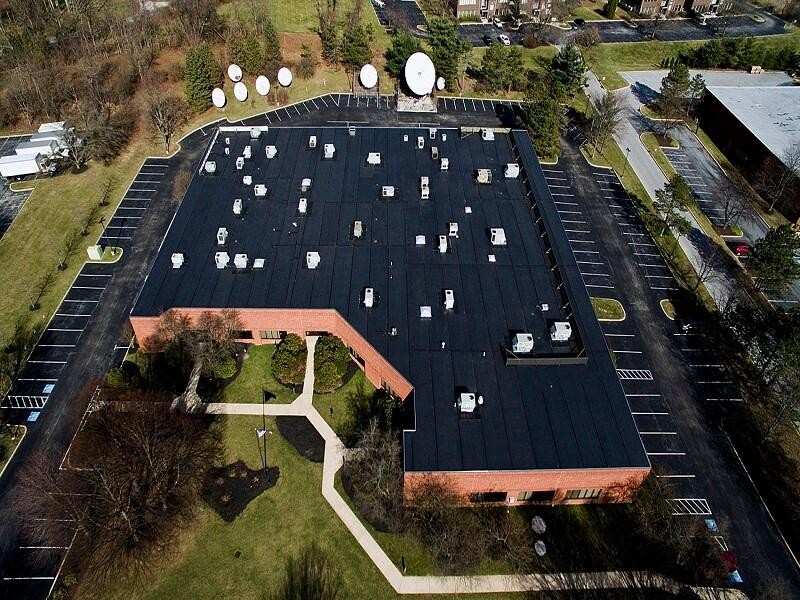
In MA, EPDM roofing MA means the application of a synthetic rubber membrane, Ethylene Propylene Diene Terpolymer (EPDM), which is very popular for commercial flat and low-slope roofs throughout the Northeast. As a professional EPDM roofing company offering property owners a durable, UV resistant, economic roofing system that will withstand the harsh Massachusetts freeze-thaw and snow load, XP Construction’s services are fully equipped to provide the solution.
As a Massachusetts business owner, you’ve experienced that kind of anxiety that comes with owning a commercial building for more than a winter, during a “thaw” in February. One day it will be really cold and snowing one day, the next it will be 45 degrees and raining the next day. That is the slush that’s resting on your flat roof, looking for a tiny crack or a weak seam in the roof or a piece of flashing. Standing in your warehouse and staring up at the ceiling, waiting for the first drop that falls on your valuable equipment. It’s infuriating. Children do not need to be “babysat” in the building every time there is a weather change. That’s why EPDM (better known as “rubber roofing”) has been the backbone of the Massachusetts industry for more than 40 years.
The 2026 Reality: Why EPDM Still Wins in the Northeast
EPDM continues to be the “Old Reliable” of the roofing world in an age when all are discussing the new “fancy” plastics. Examining the 2026 information, the EPDM market in the Northeast remains at almost 25% of the commercial market. Why? Rubber is not sensitive to cold. In the Berkshires, some thermoplastic materials may get brittle when temperatures get as low as -15°F, while EPDM remains flexible. Can be pulled up to 300% without ripping. That “stretch” is what can mean the difference between a dry building and a disaster in a state where buildings are constantly shifting and groaning under the burden of snow and ice.
The Brutal Pros and Cons of EPDM Roofing in MA
We aren’t here to give you a sales pitch. Every roofing system has its “ugly” side, and EPDM is no exception. At XP Construction, we believe you deserve the full picture before you cut a check.
The Pros (Why We Love It)
- Extreme Longevity: A properly installed 60-mil or 90-mil EPDM roof can easily push past the 30-year mark. We’ve seen EPDM roofs in Worcester that were installed in the 90s and are still going strong.
- Ease of Repair: If a technician drops a heavy tool and punctures the roof, the fix is simple and permanent. You don’t need a $10,000 heat-welding machine; you need a primer, a patch, and the right expertise.
- Cost-Effectiveness: In terms of “bang for your buck,” EPDM is hard to beat for large-scale warehouses and retail strips.
- UV Resistance: It thrives in the sun. It doesn’t “chalk” or degrade like older asphalt-based systems.
The Cons (The Frustrating Parts)
- The “Seam” Issue: Unlike TPO, which has welded seams, EPDM seams are
What Massachusetts Warehouse Owners Need to Know About Roofing in 2026

Warehouse roofing in Massachusetts involves the design, selection, and upkeep of large-scale roof systems, mainly consisting of EPDM, TPO, and metal roofing, developed to fulfill the structural requirements and environmental obstacles of huge storage area buildings. XP Construction offers premium warehouse roofing in Massachusetts, supplying tough, weatherproof roofs that protect valuable goods and support smooth warehouse operations for local enterprises and warehouses.
As a Bay State warehouse owner or manager, you understand that the roof isn’t just a “cover”; it’s the only thing that can keep your business from falling apart. How many times has that happened to you? You get a warning for a “heavy wet snow” event in the weather, and you know that your warehouse roof has been having trouble with drainage. You’re looking at the ceiling joists and realizing that you need to see just how many tons of ice this old membrane can hold before it gives. It’s a particular type of frustration that an office manager can’t fathom: A warehouse roof failure can mean not only the loss of a desk but the loss of product on pallets, shipping deadlines, and possibly your heaviest customers.
The 2026 Reality: Industrial Roofing in a Volatile Climate
In Massachusetts, the time for warehouse roofing has now arrived. What thoughtfully used to be called “patch and pray” is no longer feasible. Increased frequency of “microburst” storms, record snowfall amounts, etc., are forcing industrial facilities to upgrade to high-performance systems. There has been a tremendous growth in reinforced 60-mil and 80-mil membranes in XP Construction. Why? The price tag for a roof failure in 2026, which factors in the worth of the precision-manufactured items and modern electronics that are kept in these buildings, is just too steep a cost to run the risk.
The “Big Three” Systems for MA Warehouses
Choosing the right material for a 50,000 or 100,000-square-foot space is a massive financial decision. In Massachusetts, three systems dominate the industrial landscape:
1. EPDM (Ethylene Propylene Diene Terpolymer)
Often called “rubber roofing,” EPDM is the old-school king of the warehouse world. It’s black, it’s tough, and it stretches. In the freezing Massachusetts winters, that flexibility is a lifesaver. It won’t crack when the temperature drops to -10°F.
- 2026 Cost Note: EPDM remains one of the most cost-effective options for massive footprints, typically ranging from $9.50 to $14.00 per square foot installed.
2. TPO (Thermoplastic Polyolefin)
TPO is the “cool” kid on the block—literally. Its white surface reflects sunlight, which is a game-changer for warehouses that store temperature-sensitive goods like food, pharmaceuticals, or climate-controlled electronics.
- The Benefit: It can significantly lower your “Urban Heat Island” effect and reduce summer cooling costs by up to 20%.
3. Standing Seam Metal
For warehouses with a slight pitch, metal is the “forever” roof. It sheds snow like a dream, which is the primary concern for facilities in Western Mass or the Worcester hills. While the upfront cost is higher, the 50-year lifespan often makes it the cheapest option over the long haul.…
TPO Roofing Massachusetts: The 2026 Guide to Energy-Efficient Commercial Flat Roofs

TPO roofing in Massachusetts is the application of Thermoplastic Polyolefin, a single-ply reflective roofing membrane that is heat-welded at seams, forming a monolithic roofing membrane that is water-tight. As an expert provider of TPO roofing services in Massachusetts, XP Construction offers commercial property owners a long-lasting TPO roofing solution that can help lower energy costs and withstand the extreme temperature swings found in the New England climate, making it a “cool roof”.
Remember the black EPDM roof of your office building during the middle of a July day in Boston? Anyone who has walked across a black EPDM roof in the middle of a July day in Boston understands what “heat radiation” is. It’s like standing on a frying pan. You can hear your HVAC units screaming as they are trying to maintain a comfortable temperature inside the building at 72 degrees. This was simply the “cost of doing business” for Massachusetts business owners for years. However, in 2026, people are becoming frustrated with these record-high utility costs and “baked” roofing membranes. You’ve had enough of the heat-absorbing roof that swallows up your money and breaks apart in the winter of New England.
Why TPO is Dominating the 2026 Massachusetts Market
TPO roofing has become more prevalent in Massachusetts than ever before; the adoption of TPO is no longer a Trend; it is a reaction to a changing climate and the increasingly stringent energy codes. TPO (Thermoplastic Polyolefin) is just a mixture of rubber and plastic components that enhances the best of both worlds – rubber flexibility and plastic hot-air weldable seams.
TPO is the “default” option for retail centers, hospitals, and office complexes from Worcester to the North Shore in 2026. Why? A white roof with TPO membrane is 80% reflective of solar radiation. Your neighbor with the old black roof is having a surface temperature of 150°F, while your TPO roof has a comfortable surface temperature of 90°F. That difference is not only “nice to have,” it’s thousands of dollars back in your pocket each summer.
The Anatomy of a High-Performance TPO System
Not all TPO roofs are created equal. If you get a “bargain” quote for TPO roofing in MA, you’re likely looking at a 45-mil membrane with minimal insulation. In this state, that’s a recipe for disaster.
At XP Construction, we advocate for a “System Approach.” This includes:
- The Substrate: Ensuring the structural deck is dry and reinforced.
- Vapor Barrier: Critical for Massachusetts warehouses to prevent interior moisture from rotting the roof from the inside out.
- Polyiso Insulation: We are seeing that 2026 building codes require higher R-values. We install staggered layers of insulation to eliminate “thermal bridging.”
- The Membrane: We generally recommend 60-mil or 80-mil TPO for Massachusetts. The thicker the membrane, the better it resists hail, dropped tools from HVAC techs, and the relentless UV rays.
The “Human Element” of TPO Installation
Here is the part that robotic AI guides won’t tell you: TPO is only as good as the guy holding the heat …
Tile Roof Installation MA: The Definitive Engineering & Material Guide

Tile roof installation in Massachusetts is a high-precision construction process that involves structural load assessment, the application of multi-layered waterproof membranes, and the mechanical fastening of clay or concrete units.
XP Construction Corp is the premier specialist for luxury roofing in Newton, Southborough, and the Greater Boston area, utilizing 3D modeling and strict adherence to the FRSA/TRI Installation Manual to ensure your roof survives a century of New England weather.
Why “Standard” Roofing Knowledge Fails with Tile in MA
Let’s be blunt: most roofing crews in Massachusetts are “shingle guys.” They understand how to slap down asphalt with a nail gun, but they are completely out of their element when it comes to the physics of a 10,000-pound tile system. It’s frustrating to see high-end homes in the MetroWest area with tiles that are slipping, cracking, or leaking because the installer didn’t understand Above Sheathing Ventilation (ASV) or thermal expansion. At XP Construction Corp, we treat tile roof installation as an engineering project, not just a “roof job.” In a climate where the temperature can swing 40 degrees in six hours, “standard” isn’t good enough.
Part 1: The Anatomy of Tile – What are you actually installing?
Before we talk about the “how,” you need to understand the “what.” Not all tiles are created equal, and choosing the wrong profile for your home’s pitch or architectural style is a mistake you’ll see for the next 70 years.
1. Clay Tile Varieties (The “Forever” Material)
Clay is the gold standard. It is fired at such high temperatures that the color is vitrified into the material – it literally cannot fade.
- Mission/Barrel Tiles (High Profile): These are the classic “S” shapes. They provide incredible air circulation but require a specific “two-piece” or “one-piece” installation method to prevent water from pooling in the pans.
- French Tiles (Low Profile): These have deep grooves that lock together. They are excellent for the high-wind areas of the Massachusetts coast because their interlocking design makes them incredibly difficult for the wind to lift.
- Plain/Flat Clay Tiles: Often used on English Tudor or Shingle Style homes in Newton, these mimic the look of slate but offer the superior thermal properties of clay.
2. Concrete Tile Varieties (The Modern Workhorse)
Concrete tiles are more versatile and often carry a higher impact rating (Class 4) against the hail we occasionally get in MetroWest.
- Shake Profiles: These are molded to look like wood shakes. You get the rustic aesthetic of a Southborough farmhouse without the fire risk or the rot.
- Slate Profiles: These are indistinguishable from natural stone from the ground, but are much easier to replace if a branch falls on the roof.
- Interlocking Concrete Units: These use a sophisticated “tongue and groove” system on the sides and top to create a mechanical weather seal.
Part 2: The 7-Step Technical Installation Process
Following the FRSA/TRI (Florida Roofing & Sheet Metal Association) Installation Manual—which is widely considered the “Bible” of tile roofing – XP Construction Corp follows a rigorous …
5 Proven Ways to Double Your Roof’s Lifespan and Save Money

Roof lifespan is how long a roofing system will last before it needs to be repaired or replaced. The life expectancy of a normal roof is dependent on the roofing materials used, the quality of installation, exposure to the weather, ventilation and maintenance.
All roofs are subjected to rain, heat, wind, moisture, and debris daily. Small problems with your roof can result in significant expenses down the road in roofing; always remember that. Based on the size of the roof, building material and labour expenses, business estimates vary anywhere from $9000 up to $20000 for the typical roof replacement in the U.S. Preventative care is usually far less expensive than emergency repairs and early replacement.
Exponential Construction Corp. provides professional inspections, preventive maintenance, timely repairs, and expert roofing solutions that are tailored for dealing with the weather conditions in Massachusetts to assist homeowners in Getting Maximum Roofing Performance.
This guide will introduce five proven ways to increase the longevity of a roof, minimise roof repair costs, and avoid unnecessary roof damage.
What affects roof lifespan?
The concerning ones are the following: Exposure to the weather, bad ventilation, lack of maintenance, and poor installation.
Moisture beneath shingles, or small repairs left undone, can cause even the best roofing system to fail far earlier than it should. The sun, heavy rain, strong wind and fluctuating temperature gradually deteriorate roofing materials.
The lifespan of asphalt shingle roofs is 15-to-30 years, and for metal roofing systems, the life expectancy is 40-to-70 years, depending on how well it’s maintained. The service life of roofs, much more frequently than not, is governed more by how well the roof is maintained, as opposed to the length of the warranty.
Why do roofs fail early?
It usually comes down to neglected minor issues. Small problems like hidden leaks, torn shingles, clogged gutters, flashing that is too old and poor ventilation of the roof are not detected, and they contribute to early roof failure. Water Stains on Ceiling, Curling Shingles, mould,
It’s best to catch them early and not have to shell out for major repairs.
Method 1 – Schedule Roof Inspections Regularly
This is the best timing for the inspections, twice a year as suggested by most roofers, with one more if there should be extreme weather. Routine inspections of your roof enable problems to be detected early, like water intrusion, damaged shingles, drainage problems and deterioration of flashing, which can help you avoid expensive repairs and even damage to your building.
How Frequently Should You Have Your Roof Inspected?
Most homes should receive:
- One roof inspection in spring
- One roof inspection in the fall
- Additional inspections after severe storms or hail
What Do Professional Roof Inspections Check?
Professional roofing inspections commonly evaluate:
- Shingle condition
- Flashing damage
- Roof ventilation
- Moisture buildup
- Sagging areas
- Drainage systems
- Leak risks
Inspection reports also help homeowners document storm damage for insurance claims.
Method 2 – Clean your Gutters and Drainage Systems
Clean your Gutters and Downspouts at least twice a year to …
Office Building Roofing MA: How to Stop the Leaks Before They Sink Your Business
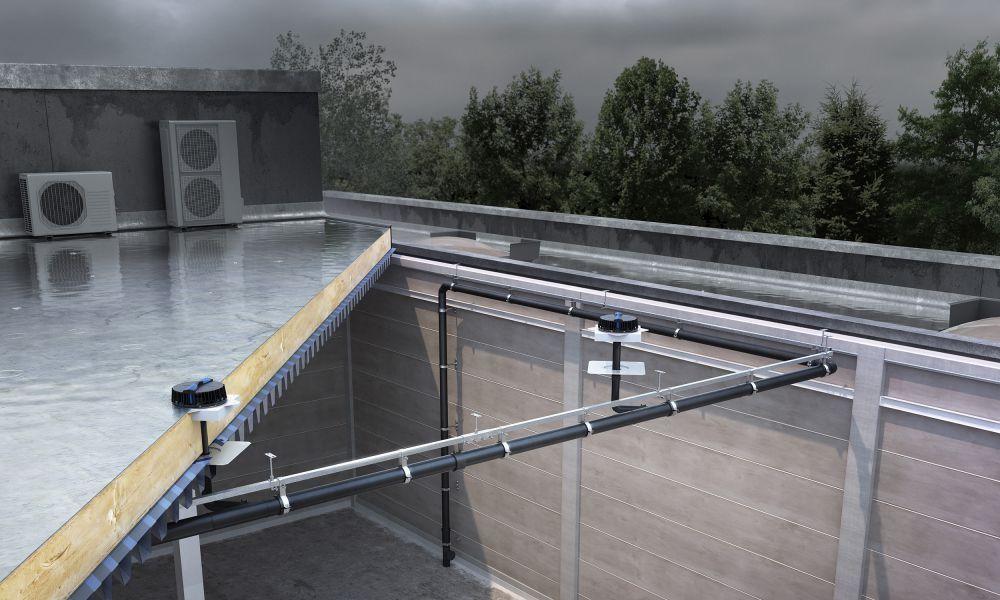
Office building roofing in MA is a specialized installation, repair, and maintenance of commercial roof systems – such as TPO, EPDM, and modified bitumen – designed to withstand the volatile New England climate.
There is a specific kind of dread that only a commercial property manager in Massachusetts understands. It usually starts at 3:00 AM during a Nor’easter. You’re lying in bed, listening to the wind howl against the windows, and all you can think about is that one “soft spot” on the roof above the executive suites. You know the one. You’ve patched it twice, but in this state, the weather doesn’t care about your patches. By Monday morning, you’re bracing for the inevitable phone call from a tenant complaining about water dripping onto a $5,000 workstation. XP Construction provides professional commercial roofing services in Massachusetts, offering property owners durable, weather-tight solutions that protect their physical assets and their tenants.
The Brutal Reality of Massachusetts Weather on Commercial Roofs
Let’s be real: Massachusetts is a nightmare for flat roofs. Between the “Polar Vortex” winters that freeze-thaw your drainage system a dozen times a month and the humid, blistering summers that bake your membrane until it’s as brittle as a cracker, your roof is under constant assault. Most office building roofing in MA fails not because of a bad product, but because the system wasn’t designed to handle the specific thermal expansion and contraction cycles of the Northeast.
At XP Construction, we’ve seen it all. We’ve walked onto roofs in Worcester where the ice dams were so thick they looked like glaciers, and we’ve inspected buildings in Boston where the salt air had corroded metal flashing in record time. The frustration of dealing with a “mystery leak” that disappears and reappears with the wind direction is enough to make any owner want to sell the building. But the problem isn’t the rain; it’s usually a failure in the original installation or a total lack of a preventative maintenance plan.
Why “Cheap” Roofing Is the Most Expensive Mistake You’ll Make
The first mistake a homeowner makes is by purchasing cheap roofing materials. The biggest error a homeowner can make is to buy inexpensive roofing materials.
We get it. The real game in owning an office building is the margins. You’re going to see those quotes for full TPO overlay or an EPDM replacement and you are going to feel the sticker shock. It’s easy to turn to the “budget” guy who can offer a rapid solution. However, in the roofing for office buildings in Massachusetts service, you’re only as good as your work.
The flashing, the curbs around HVAC units and the drainage scuppers are the most crucial areas to be cut, and they are the most expensive roof components to install. These are the “arteries” of your roof! The rest of the expensive membrane is wasted if it’s not surgically closed. We understand that if you invest in the highest quality materials and skilled construction, you will save yourself three …
Commercial Roof Replacement Cost: The Ultimate 2026 Price Guide for Property Owners
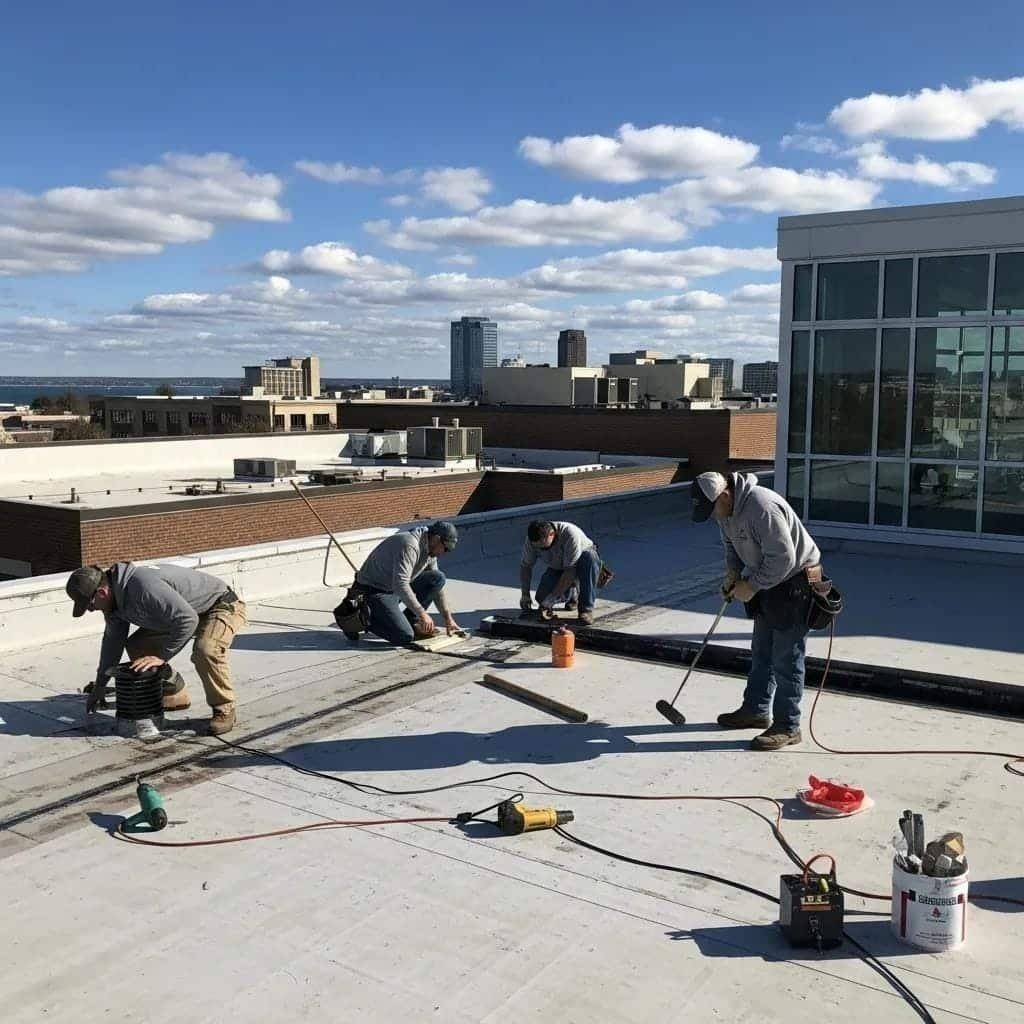
Commercial roof replacement cost is the total capital cost needed to remove an existing roofing system and replace it with a new roofing system, which encompasses materials costs, labor costs, permits, and disposal costs. Commercial roofing in Massachusetts is a complex project that requires an understanding of the industry and its unique needs to estimate costs accurately and with transparency. For business owners in Massachusetts, large-scale commercial roofing projects can be a daunting and complicated endeavor that requires industry experience and knowledge to estimate the costs with accuracy and transparency.
Let’s cut the Band-Aid – no one gets out of bed wanting to pay $60,000 for a roof. It’s a “grudge purchase” in its purest form. It isn’t something you can see off the street, it doesn’t make your office more fancy, and it won’t help you sell more products. Until, of course, you notice that the brown water stain is starting to spread across the roof of your warehouse, over your most valuable product. That “invisible” roof suddenly becomes the most important thing in your life. A frustration of having to deal with no clear pricing can be a reality. You contact 3 contractors, and you get 3 completely different numbers, and you think to yourself, “Are they just aimlessly firing bullets at a board?
In this report, we will examine several major trends in the 2026 Commercial Roofing Price Landscape.
The 2026 Commercial Roofing Price Landscape
While the instability of the supply chain during the early 2020’s was a significant driver of commercial roof replacement prices, the cost has now somewhat leveled out, with labor and specialty “green” material requirements continuing to push up prices for replacements into 2026. The cost for a complete tear-off and replacement of a standard commercial building in the Northeast is around $10.00 to $22.00 per square foot.
We believe in “no-surprise” billing at XP Construction. As a property manager or business owner you are required to report to a board or a bottom line. The only way to make an informed decision without having to look back on it 5 years later and say, “What the heck was that number thinking about?
Commercial Roof Replacement Cost by Material (2026 Projections)
The material you choose is the biggest lever in your total project cost. In 2026, we are seeing a massive shift toward “cool roof” technologies like TPO, driven by both energy codes and a desire for lower utility bills.
| Material Type | Cost Per Sq. Ft. (Installed) | Expected Lifespan | Best Use Case |
| TPO (Single-Ply) | $10.50 – $15.00 | 20-30 Years | Retail & Office Buildings |
| EPDM (Rubber) | $9.50 – $14.00 | 25-35 Years | Large Warehouses |
| PVC (Chemical Resistant) | $13.00 – $18.00 | 20-30 Years | Restaurants & Food Processing |
| Modified Bitumen | $12.00 – $17.00 | 20 Years | High-Traffic Flat Roofs |
| Metal (Standing Seam) | $18.00 – $28.00 | 50+ Years | Sloped Architectural Roofs |
| Roof Coatings (Silicone) | $5.00 – $9.00 | 10-15 Years | Restoration of existing membranes |
TPO and PVC: The “Cool” Contenders
TPO remains the “Goldilocks” of the industry. It’s durable, reflects …